Directing
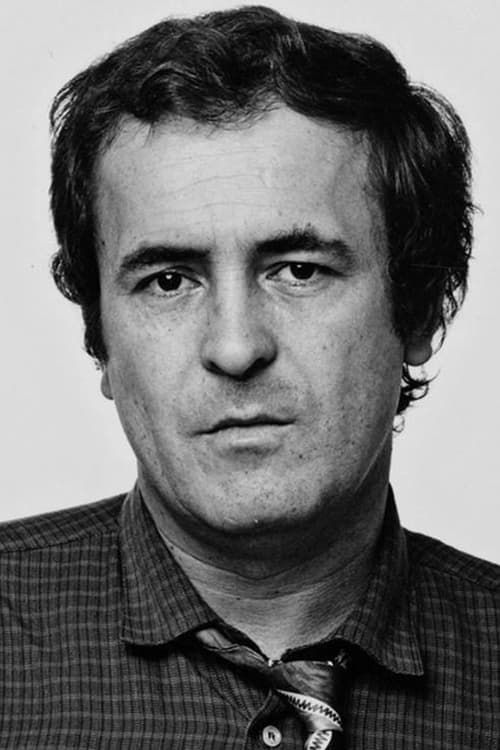
Bernardo Bertolucci
Also Known As: 베르나르도 베르톨루치, برناردو برتولوچی, Бернардо Бертолуччи
Birth Date
March 16, 1941
Death Date
November 26, 2018
(passed away at 77)
Place of Birth
Parma, Emilia-Romagna, Italia
Popularity
trending_up2
Biography
Bernardo Bertolucci (/ˌbɜːrtəˈluːtʃi/ BUR-tə-LOO-chee; Italian: [berˈnardo bertoˈluttʃi]; 16 March 1941 – 26 November 2018) was an Italian film director and screenwriter with a career that spanned 50 years. Considered one of the greatest directors in the history of cinema, Bertolucci's work achieved international acclaim. With The Last Emperor (1987) he became the first Italian filmmaker to win the Academy Award for Best Director, and he received many other accolades including a BAFTA Award, a César Award, two Golden Globes, a Golden Lion for Lifetime Achievement, and an Honorary Palme d'Or. A protégé of Pier Paolo Pasolini, Bertolucci made his directorial debut at 22. His second film, Before the Revolution (1964), earned strong international reviews and has since gained classic status, being called a "masterpiece of Italian cinema" by Film4. His 1970 film The Conformist, an adaptation of the Alberto Moravia novel, is considered a classic of international cinema, and was nominated for an Academy Award for Best Adapted Screenplay and the prestigious Berlin Golden Bear. His 1972 erotic drama Last Tango in Paris was controversial due to its rape scene and, later, comments made by actress Maria Schneider about her treatment on set. Bertolucci's later films such as the historical epic 1900 (1976), the family drama La Luna (1979), and the darkly comedic Tragedy of a Ridiculous Man (1981), were also controversial but acclaimed. His 1987 film The Last Emperor, a biopic of Chinese monarch Puyi, was a critical and commercial success, earning rave reviews and sweeping the 60th Academy Awards (including Best Picture and Best Director). This was the start of what has since been described as his "Oriental Trilogy", a trio of films including The Sheltering Sky, an adaptation of the novel of the same name, and Little Buddha, a Buddhist religious epic, all three of which feature scores by Ryuichi Sakamoto. His 1996 film, Stealing Beauty, brought him his second of two Palme d'Or nominations. He continued directing well into the 21st century, releasing his final film, Me and You, in 2012. Bertolucci's films often deal with themes of politics, sexuality, history, class conflict and social taboos, and his style has influenced several filmmakers. Several of his films have appeared on lists of the greatest films of all time. Critics have remarked that what makes Bertolucci different than other directors is his masterful combination of "visual richness and visual freedom". Description above from the Wikipedia article Bernardo Bertolucci, licensed under CC-BY-SA, full list of contributors on Wikipedia.
Photos


Les Rendez-vous du dimanche
Self
1975 • 1 episode
Spécial cinéma
Self
1974 • 4 episodes

Goldene Kamera
Self
1984 • 1 episode
Midi trente
Self
1972 • 1 episode
Ciné regards
Self
1978 • 1 episode
Leçon de Cinéma
Self
2004 • 1 episode
Square
Self
2012 • 1 episode
Ennio
Self
2022
The Story of Film: An Odyssey
Self
2011 • 1 episode
Scene by Scene
Self
1997 • 1 episode
Un film et son époque
Self
2003 • 1 episode
Venice 70: Future Reloaded
(segment Bernardo Bertolucci)
2013
Marlon Brando: An Actor Named Desire
Self - Filmmaker
2014
Kurosawa's Way
Self
2011
Plankton Salesmen
Self (archive footage)
2017
… But Film Is My Mistress
Self
2010
Playboy: The Story of X
Self - Director
1998
Seduced and Abandoned
Self
2013
Empire of the Censors
Self
1995
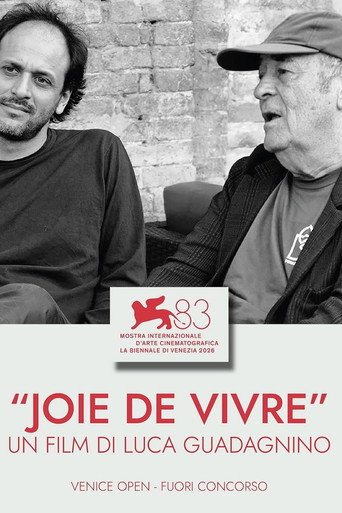
Joie de Vivre. Notes, Thoughts, Words, Reflections, Faces, Visions, Around Bernardo Bertolucci and the Cinephilia of the 20th Century That Is No More
Self (archive footage)
—